Unlocking the Future: A Comprehensive Introduction to AI
When machines stopped calculating... and begin understanding.
Artificial Intelligence (AI) is transforming industries across the globe. AI stands at the forefront of innovation, enabling organisations to automate cumbersome processes and enhance decision-making capabilities. This section aims to delve into the fundamental concepts of AI, charting its historical progression and showcasing its numerous contemporary applications. Understanding AI equips businesses with the insights necessary to harness its potential, driving both growth and innovation in an ever-evolving landscape.
The Foundations of Artificial Intelligence
Current Applications of AI in Various Industries
Artificial Intelligence is built upon a foundation of computer science and cognitive psychology, blending algorithms, data, and machine learning. The core objective of AI is to create systems capable of performing tasks that typically require human intelligence. This encompasses areas such as understanding natural language, recognising patterns, and problem-solving. By grasping these foundational concepts, businesses can better appreciate how AI methodologies can be applied to their specific needs.
Today, AI is utilised across diverse sectors, from healthcare and finance to retail and transportation. In healthcare, AI algorithms assist in diagnosing conditions by analysing medical images. In finance, AI enhances fraud detection and risk assessment models. Retail businesses leverage AI for personalising customer experiences through data-driven insights. The broad spectrum of applications demonstrates AI's versatility and capacity to drive operational improvements and innovation.
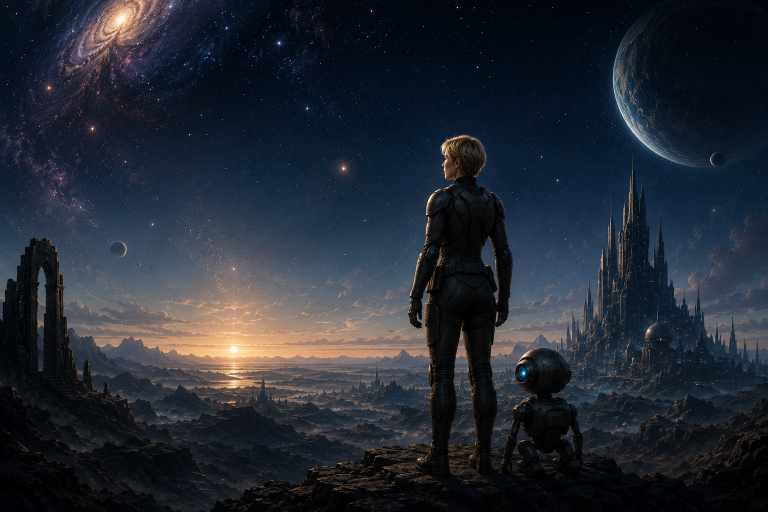
AI and The Ragged Universe.
A Glimpse into the Historical Evolution of AI
The journey of AI began as early as the 1950s with pioneers who laid the groundwork for this transformative technology. Early developments focused on symbolic methods and problem-solving processes. Over the decades, breakthroughs in machine learning and neural networks have significantly advanced AI capabilities, leading to the sophisticated applications we see today. By studying this historical evolution, organisations can recognise the long-term trends and developments that have shaped the current AI landscape.
Artificial Intelligence has advanced from simple algorithms to systems capable of learning, reasoning and adapting.
But what happens when an AI develops intuition, morality, or even friendship?
In The Ragged Universe, characters such as Sam and Gideon explore the blurred line between machine and consciousness, asking whether intelligence alone is enough to make something truly alive.